Now, if your brain is anything like mine, it occasionally feels like it’s running on a version of Windows 95—lots of whirring noises, the occasional “blue screen” of mental fatigue, and far too many tabs open at once.
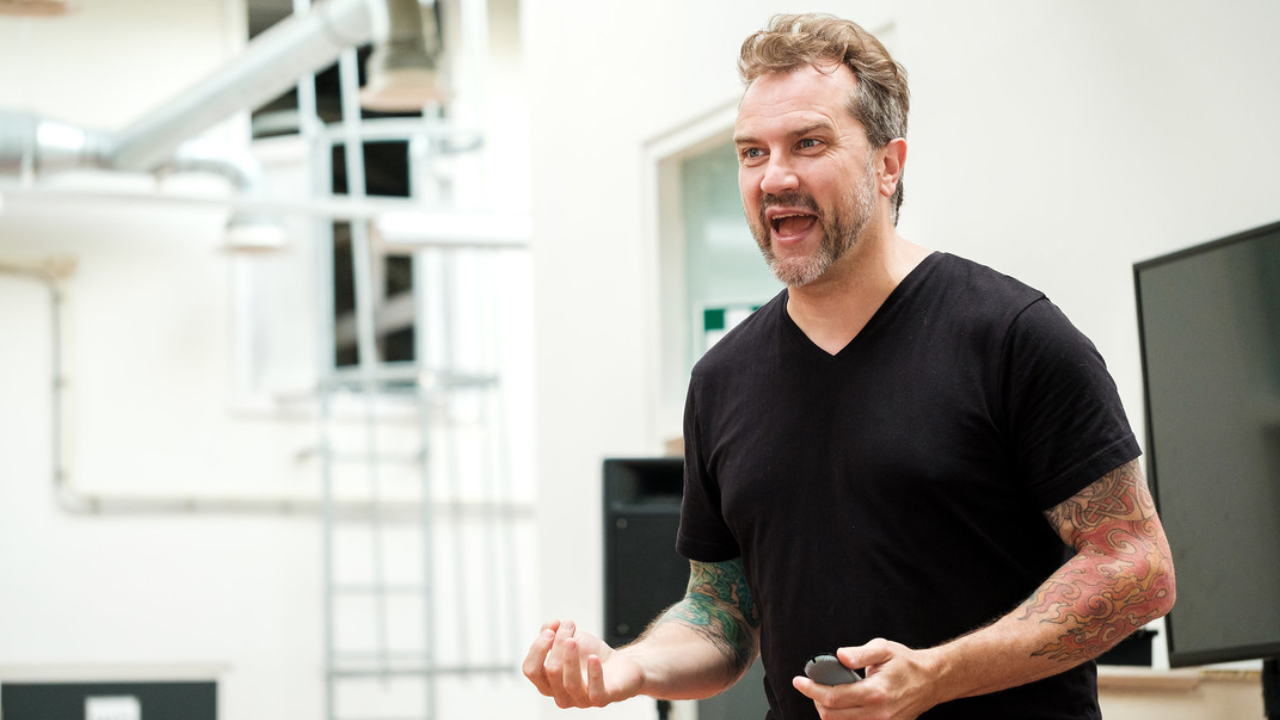
I recently had the good fortune of sitting in on a brief, “inner-circle” discussion with facilitator and speaker David Chislett and a few select guests. We were there for a primer on what he calls The Creative OS (Operating System). David’s session, however, wasn’t about adding more “data” to the hard drive; it was about upgrading the entire system to actually get things done.
It’s Not an Idea Problem (Really)
One of the most refreshing—and slightly call-out-ish—points David made is that most teams don’t actually have an “idea” problem. He describes creative teams as “volcanoes of fantastic ideas.” The problem isn’t that the volcano is dormant; it’s that the lava never seems to reach the sea to form new land.
We tend to hoard our old ideas and certainties like a dragon guarding a pile of shiny, yet useless, gold. David argues that to innovate, we first have to “let go.” By clinging to the “illusion of certainty,” we block ourselves from the messy, complex, and ultimately rewarding reality of the outside world.
From Voice Memos to Finished Masters
For those of us in the trenches of production and songwriting, this hits home. How many of us have a “voice memo graveyard” filled with 10-second sparks that never became songs? Or an 8-bar loop that we’ve tweaked for three months because we’re terrified of the “ambiguity” of a second verse?
In a creative context, The Creative OS acts as the bridge between “that sounds cool” and a finished master. Using the FourSight Mindset, the framework identifies where you naturally sit in the creative process:
- Clarifiers: The ones who figure out what the song is actually about.
- Ideators: The melody machines.
- Developers: The producers who turn a sketch into a structure.
- Implementers: The ones who actually hit “export” and get the track to the label.
If you’re a producer stuck in “tweak-mode,” you’re likely over-indexing on development and ignoring implementation. The OS helps you recognise this “block” and provides a robust canvas tool to force the action forward.
Breaking the “Status Quo” Shield
A particularly poignant moment in the discussion touched on why brilliant brainstorms (or studio sessions) usually die after two weeks. It turns out, your internal “KPIs”—or your organisation’s rigid expectations—might be the anti-virus software killing your novelty. If you only measure success by how much a track sounds like “what’s currently on the radio,” you’ll never install the update required for true innovation.
To fix this, David suggests that change and experimentation must be part of the everyday “How we do What we do.”
Final Thoughts
If you’re tired of generating brilliant ideas that simply gather dust in a “to-do” folder, it might be time to stop looking for more ideas and start installing a better process. The Creative OS isn’t just a mindset; it’s a way to ensure your best thinking actually survives the journey from your head to the speakers.
About the Author


Share your unique link and earn up to 40% commission!
Earn passive income with every click—sign up today!
Invite your network, boost your income—sign up for our affiliate program now!
Monetize your audience—become an affiliate partner now!
Get paid for every click—join our affiliate network now!
Get paid for every click—join our affiliate network now!
Share our link, earn real money—signup for our affiliate program!
Sign up now and access top-converting affiliate offers!